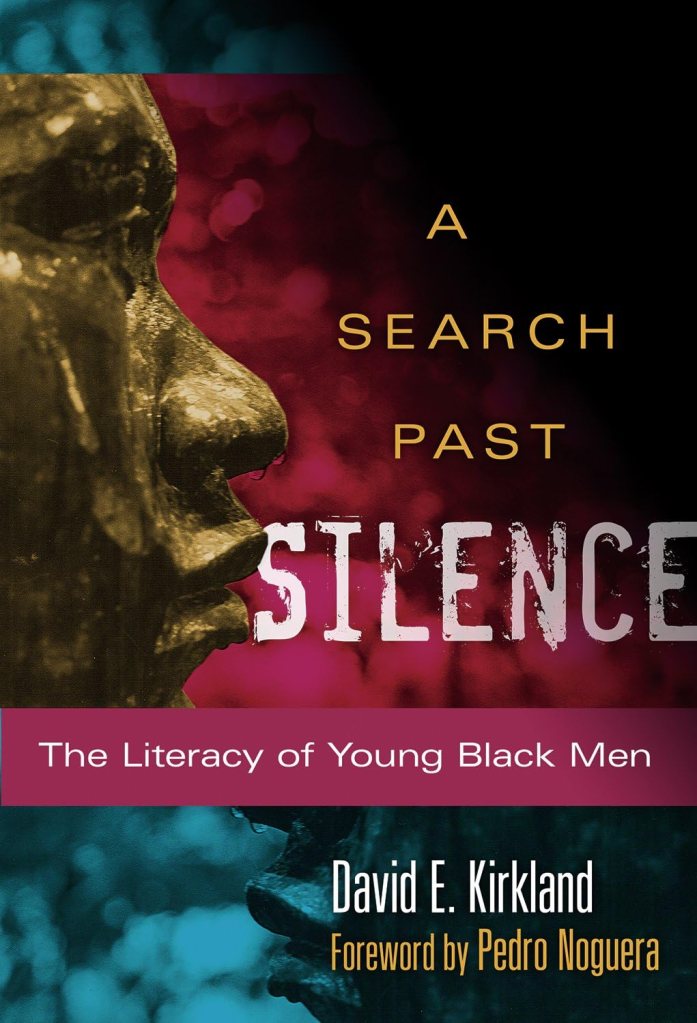
This beautifully written book argues that educators need to understand the social worlds and complex literacy practices of African American males in order to pay the increasing educational debt we owe all youth and break the school-to-prison pipeline. Moving portraits from the lives of six friends bring to life the structural characteristics and qualities of meaning-making practices, particularly practices that reveal the political tensions of defining who gets to be literate and who does not. Key chapters on language, literacy, race, and masculinity examine how the literacies, languages, and identities of these friends are shaped by the silences of societal denial. Ultimately, A Search Past Silence is a passionate call for educators to listen to the silenced voices of Black youth and to re-imagine the concept of being literate in a multicultural democratic society.
Reviewer Annie Wang wrote:
By following a group of young men for several years, Kirkland made me feel like I was there in their conversations. Using what he calls a reflexive “I-us”, I was able to “see” the relationship between researcher-subject, and how masculinity and literacy come together in the lives of young Black men. One of my favorite passages brings to the fore one component of Black male literacy that is often ignored: silence. Although the state apparatus attempts to silence Black male voices, bodies, and perspectives, it is also a source of strength. Kirkland writes, “silence represents a theory of the Black man’s reality”. People fear silence because it creates a situation of the unknown, like when Derrick’s teacher found his diary and told him that he’s a writer, something he rarely did in class. As Derrick’s example gestures toward, Black men have varying degrees of literacy practices, and it may not be that they are disengaged from school, perhaps the school (and curriculum) is disengaged from them.
 Human Rights Collective